FROSTY CITY – COLOGNE IN THE GRIP OF FROST
Temperatures below -20 degrees Celsius in Cologne? Hard to imagine today, but the city used to experience such icy winters time and again. On 14 January 1985, the mercury in the thermometer at the weather station at Cologne/Bonn Airport dropped to -23.4. A record low!
Cold winters changed city life: streets and roofs would disappear under mountains of snow; roads would be cleared and sprinkled with salt and sand so that no one slips. The Rhine would freeze over, building huge ice floes. When you saw them move and heard the crack, it was certainly impressive – but also dangerous. Melted floes used to spill over the banks of the Rhine, flooding the city. During the “century flood” of 1874, the Rhine, which usually has the level of 3.5 metres in Cologne, rose to over 13 metres! The consequences for the city and its inhabitants were devastating. Another problem was the frost itself: people needed every spark of warmth they could get, but fuel was often scarce, and many residents had to improvise to keep warm. The cold hit homeless people the hardest. For them, winter was – and sometimes still is – a matter of survival.
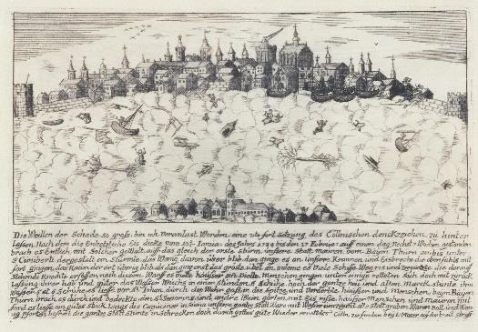
Imagine: the entire Rhine is one big iceberg! In the winter of 1783/84, the river froze over completely. But at the end of February, it suddenly got much warmer and began raining heavily. The thick ice broke up, huge chunks of it piling up almost mountain-high. Then, everything started to move: the ice masses crashed down, sweeping away ships, houses, trees, and even parts of Cologne’s old town. Mülheim – back then, a town near Cologne; today, a part of the city – was almost completely destroyed. Overall, the ice drift killed 65 people.
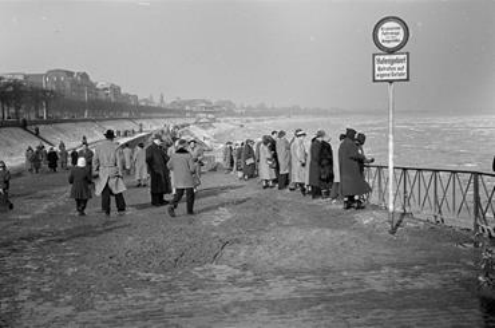
In February 1956, people flocked to Cologne’s river promenade to marvel at the rare spectacle of ice floes drifting down the Rhine. The month was marked by extreme cold, with temperatures across Germany remaining below -10 degrees for weeks on end.
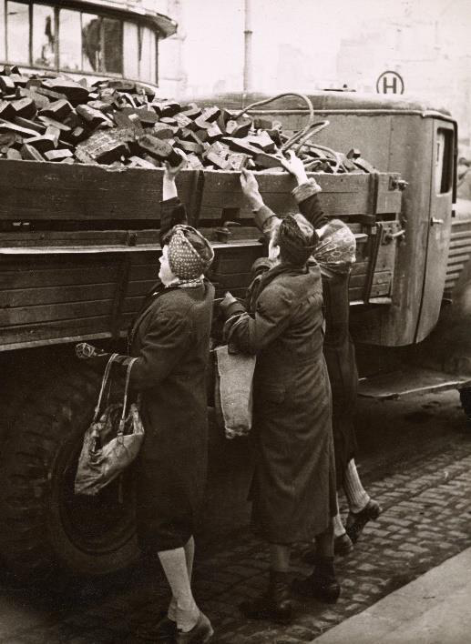
The first few winters after the end of World War II happened to be bitterly cold in Cologne – now combine this with a shortage of heating fuel and many houses in ruins! Many people were reduced to stealing the coveted coal during transport, trying to get some of the “black gold” to heat their homes. As the Archbishop of Cologne, Frings, saw it at the time: “When people are in great need, they are allowed to obtain the necessities of life by unusual means.” Hence the “Kölnisch” word “fringsen” for nicking things.
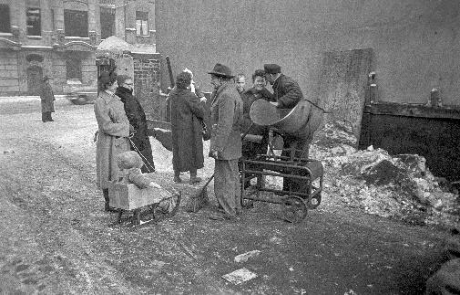
In extremely cold winters, heating fuel was scarce in Cologne, and people were freezing in their homes. Here, at one of the city’s coal yards, they hoped to get a few “Klütten” (lumps of coal). Can you see the large coal chute? It was used to pour the coal into sacks, carts or buckets.
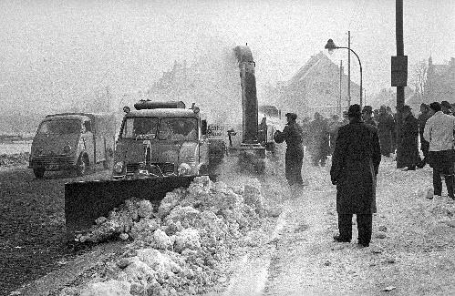
When snow falls in Cologne, there’s soon chaos in the streets. Snowdrifts block paths, trams come to a standstill, and cars get stuck. Luckily, snow ploughs and snow removal vehicles arrive to push the white masses aside. In the winter of 1956, a new type of snow blower was tested: it chopped up chunks of snow and threw them into a trailer.
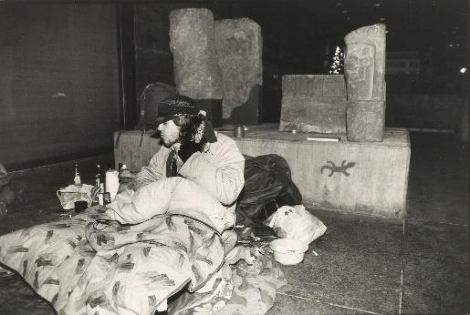
Imagine having to sleep outside in winter – in snow, rain, and freezing cold. To make things at least a bit better, the “Kölner Kältebus” drives through the city during the winter months, distributing warm drinks and blankets, taking people in need to safe accommodation. You can call the Cologne “Winter Phone” if you see someone outside in the cold who needs help. Illnesses, lost jobs, and other misfortunes mean that homelessness can happen to anyone.
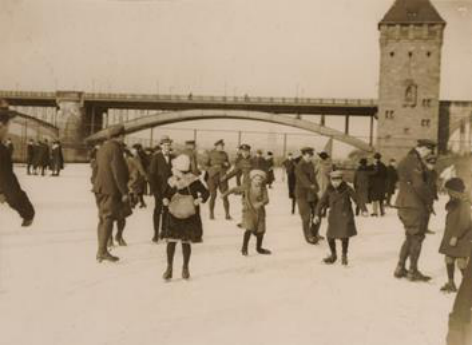
A muff looks fancy and is also practical: putting both hands inside keeps them warm. Girls and women appreciated this, for instance, while ice skating on the frozen floodplains in Cologne-Poll. Cold fingers begone! Today, we prefer gloves, but for a long time, the muff was a key piece of clothing in winter.
A small stove like this, cutely named “a potbelly stove”, used to be found in many living rooms. If you fed it enough coal, it quickly spread warmth in the room. And if you were lucky, you not only got to warm your hands but also had a pot of soup or tea to heat up on it.
This hot water bottle is made of metal. This means that it’s hard and also less than safe: if you touch a freshly filled one directly, you can easily get your fingers burned. But tucked between the blankets, it warmed up the bed quite nicely. Some people even put a warmed-up brick in their bed instead of a hot water bottle! Can you find where the hot water is poured in?

When it’s really freezing, Willy wraps himself up in his winter clothes. Still, he can’t get quite warm. Do you know that feeling when you open the freezer and the icy air blows out at you? Brrr! What else can Willy do to finally get warmer? Gently take the muff out of the box and put your hands inside it. Isn’t it cosy and warm?